When hatred erupts, our community responds and friends come together to support each other







We have spent years building compassionate relationships that celebrate diversity
“Good media builds healthy community” has been the motto for our worldwide network of writers and compassionate community leaders for nearly two decades.
This story shows what that core principle looks like when hatred erupts.
Recently, a woman from Oregon arrived in Dearborn, Michigan, wanting to stir public outrage in this diverse town just west of Detroit that has become known around the world for its prominent mosques serving the thousands of Muslim families who live in the area.
The Oregon woman was not the first anti-Islamic protester to try to touch off a wave of hatred by publicly burning a Quran in Dearborn.
As always, the brighter lights in this community knew how to respond.
Award-winning Detroit Free Press religion writer Niraj Warikoo documented the incident, which provided a baseline of fair, accurate and balanced information. This kind of quick, detailed reporting helps to keep unfounded rumors and fears from mushrooming. In his news story, Niraj also summarized some of the other similar anti-Islamic incidents in the past, reassuring readers that the community has witnessed and survived such provocations before. Finally, he alerted readers that this woman is threatening to return. If she does, folks likely will spot her right away.
Dearborn police and city officials are veterans of this kind of incendiary incident, and responded in a way that de-escalated the protest. The woman was not violating the law with her small-scale burning in a public space. She came, protested and left and soon her name is likely to be all but forgotten.
And then—the larger religious community responded. Leaders came together across denominational boundaries to reaffirm what has been a bedrock commitment to interfaith support and justice in southeast Michigan. Such interfaith bonds date back a century to the 1920s when Protestant, Catholic and Jewish leaders came together to publicly oppose the Ku Klux Klan’s campaign to take over Detroit government.
This week, the diverse leadership of the Interfaith Leadership Council of Metropolitan Detroit drafted a unified statement of opposition to the Oregon woman’s offensive act—and published that consensus for all to see online.
That online statement statement begins:
The InterFaith Leadership Council of Metropolitan Detroit (IFLC) is opposed to the burning of any sacred book of scripture and will support those communities to which this expression of opprobrium is directed. Writings that profess the beliefs of a faith community are sacred. We as a multicultural community of diverse faith traditions respect this written voice. Likewise, we admonish those who burn holy texts—or even suggest that they should be burned—as an expression of profound disrespect, implied violence and, perhaps, even hate. The values of the Interfaith Leadership Council are rooted in the concepts we call Bridging to Belonging. Every peaceful voice in the community merits a respectful hearing. When we come together in disagreement, we do so to learn from one another, to connect as individuals, and to discover the foundational principles of humanity that will allow us to live together in peace. The earnest search for peace usually will bear good fruit.
From one perspective, this is yet another example of breaking news from Michigan’s diverse and sometimes troubled religious community. But, those who have known this community for a lifetime, understand that this is a slice of daily life in a region where thousands of compassionate men and women have learned how to respond to the inevitability of hatred in our world.
This also is the southeast Michigan community that our publishing house is honored to call our home base. Since our founding in 2007, we have published books with authors both from this region and from communities that circle the globe.
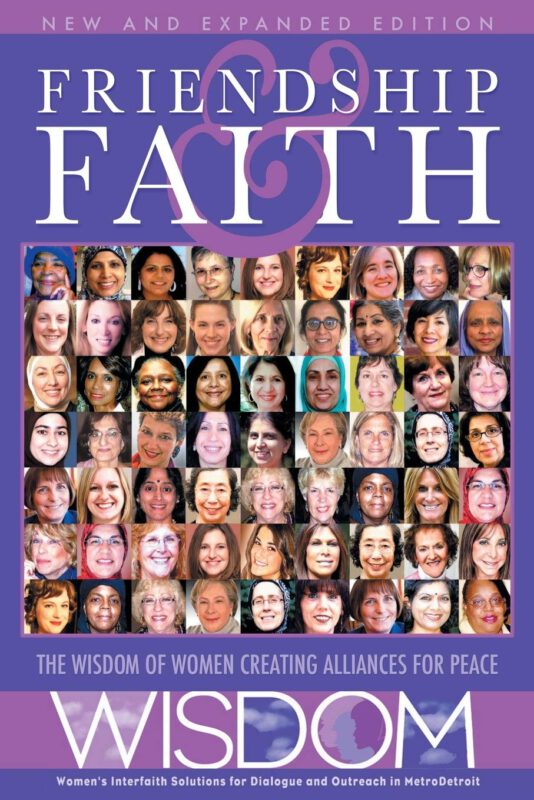
If you are concerned about these ongoing eruptions of hatred, consider learning more about the many valuable lessons learned in southeast Michigan, a global crossroads of religious and cultural diversity. One of the most inspiring books from southeast Michigan, written by dozens of women from many different faith traditions, is Friendship and Faith: The WISDOM of women creating alliances for peace.
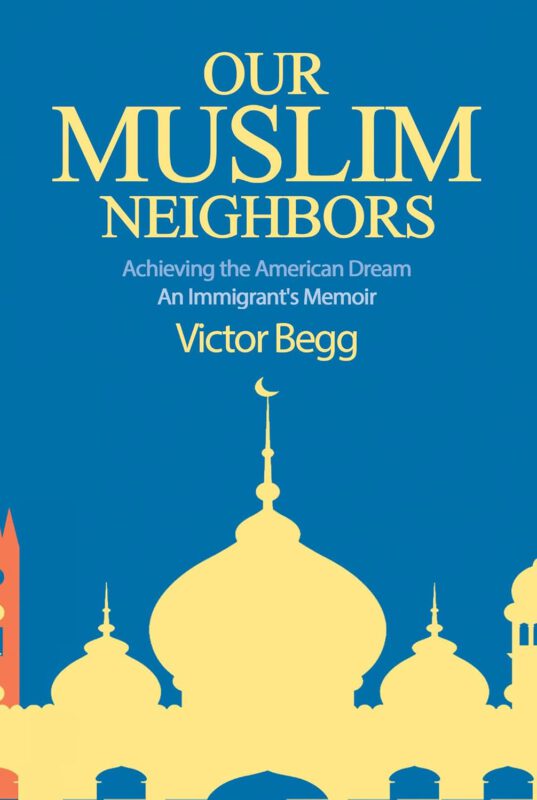
A second “must read” book that focuses on the Muslim community that has settled across metropolitan Detroit over the years is Victor Begg’s Our Muslim Neighbors. Victor’s book is his own memoir as a major Muslim leader and peacemaker—and also tells the story of how metro-Detroit’s interfaith community solidified and built new relationships especially after 9/11.
Both books will lift your spirits and provide fresh ideas for making your community a better place.