
Jewish & Chaldean solidarity: Publishing good news with all of our neighbors, encouraging friendship even in tragic times







By JOE GRIMM
Founder of the MSU School of Journalism Bias Busters
One man’s sudden act of religious hatred in Michigan on March 12 met with a community’s enduring bond of interfaith love.
And, in the midst of the grief, fear and rage at a second “truck-ramming attack” against a house of worship in Michigan’s especially diverse religious communities—this column focuses on one “good news” story that’s traveling around the world along with the tragic news. That’s important because—just as this publishing house has been committed to producing “good media that builds healthy communities” for two decades—it’s vital for journalists to report on potential pathways toward peace. As I have taught students for many years at the Michigan State University School of Journalism, our goal as journalists is fairness, accuracy and balance. We never flinch from reporting tragic news. But, often we also can see “good” emerging somewhere even in the midst of very “bad” news.
That’s the reason all of us connected with this publishing house were pleased to see a major story in The New York Times over the weekend by Dana Goldstein. She opened her news story with these words:
When more than 100 preschool children and their teachers fled Temple Israel in West Bloomfield, Mich., on Thursday amid fire and smoke from an antisemitic attack, they took refuge across the street at the Shenandoah Country Club, a hub for the local Chaldean community of Iraqi American Christians. The club’s staff served the children food and candy while they waited to reunite with their parents. The following evening, the club hosted the synagogue community for a somber, joyful and defiant Shabbat service.
“Shenandoah opened itself to Temple Israel to be the command center, to be our shelter, to be our home,” Rabbi Paul Yedwab said.
“We treat our neighbors as we treat ourselves,” said Hassan Yazbek, Shenandoah Country Club’s general manager. “These are our brothers and sisters.”
Because our core team is based here in Michigan, we knew about this aspect of the news story the same day it unfolded. Now, thanks to journalists like Goldstein and others, the world is hearing this news.
The background: On March 12, the man rammed his truck into Temple Israel in West Bloomfield, Michigan. Carrying gasoline and $2,000 worth of fireworks, it was intended to ignite an inferno where 104 preschoolers and three dozen teachers, staff members and security personnel were gathered. Law enforcement officers, who had been preparing to respond to such attacks, rushed the scene and prevented any deaths, but 63 officers were treated for smoke inhalation. The driver took his own life.
Jewish children and adults rushed to safety in the nearby Shenandoah Country Club, the largest Chaldean country club in the United States. Temple Israel, with 12,000 members, is recognized as the largest Reform synagogue in the country. Shenandoah also houses the Chaldean Cultural Center, an anchor in the largest Chaldean community in the United States.
Who are Chaldeans? Jews and Chaldeans lived together as outsiders in Iraq, an Arab and Muslim country. Though many know Arabic, Chaldeans are not Arabs. Chaldeans are Christians affiliated with the Roman Catholic Church.
First, we were impressed to see that The Jewish Telegraphic Agency reported in its first public announcement about the attack that Temple Israel thanked the club. “We are deeply and humbly grateful to our teachers, staff, security, law enforcement, and Shenandoah Country Club that welcomed us, fed us, and sheltered our staff, teachers, children, and parents.” Police and FBI also set up a command center in Shenandoah.
The agency interviewed one neighbor, David Gad-Harf, who led Detroit’s Jewish community relations group for 17 years. He said a longtime acquaintance affiliated with the country club told him, “We’re all family. We’ll do anything for you whenever you need it.”
According to the Detroit Free Press, country club President Pat Kattoo said the club has long enjoyed a good relationship with the synagogue. “When the Chaldean Iraqi American Association of Michigan bought the club years ago, a rabbi from Temple Israel was among the first to welcome them to the neighborhood, even blessing the facility for them.” The synagogue also worked with the club on parking issues.
“We love our neighbors,” Kattoo said. “Shenandoah’s doors will always be open to Temple Israel no matter what the situation.”
On the Chaldean American Chamber of Commerce’s Facebook page, one person wrote “Thank you so much to the Chaldean American community for being there for Temple Israel, especially for those little scared babies. You opened your doors and provided sanctuary immediately and with such kindness. It is as inspiring as it is appreciated. Thank you for shining such a bright beacon of light and hope in such a dark time, showing the world what community and family means.”
On WXYZ-TV’s Facebook page, a woman wrote, “I belong to Temple Israel and we are so thankful for our Chaldean neighbors. They also brought over a ton of food for the parents and kids.”
This interfaith alliance is broad. In 2003, Martin Manna, publisher of The Chaldean News, and Arthur Horwitz, publisher of The Detroit Jewish News, laid the groundwork for “Building Community,” as series of shared content. They also worked on sparking business collaborations. In a Metromode article by Dennis Archambault, Horwitz said the communities, “had a common history of having their rights constrained or restricted, not having the ability to own property.”
As people sheltered at Shenandoah, the nearby Soul Café, rushed over with pizza and chocolate-chip cookies for food and comfort. The café is an agency of the Friendship Circle, a non-profit affiliated with Lubavitch of Michigan, a branch of Hasidic Judaism that does community outreach. The café teaches and employs adults with special needs to prep, cook and serve food.
Bridge magazine interviewed Rabbi Benny Greenwald as he was rolling an empty plastic cart up the hill from the country club to the restaurant. Greenwald said, “we’re resilient and we’re loving, and ultimately that love is our faith. A little light dispels the darkness.”
The day after the attack, March 13, the country club hosted Temple Israel’s Friday evening Shabbat service.
Care to help?
Please use the social-media sharing buttons with this article to send it to friends. You might find that this news will bring a measure of hope and even positive action among people in your community.
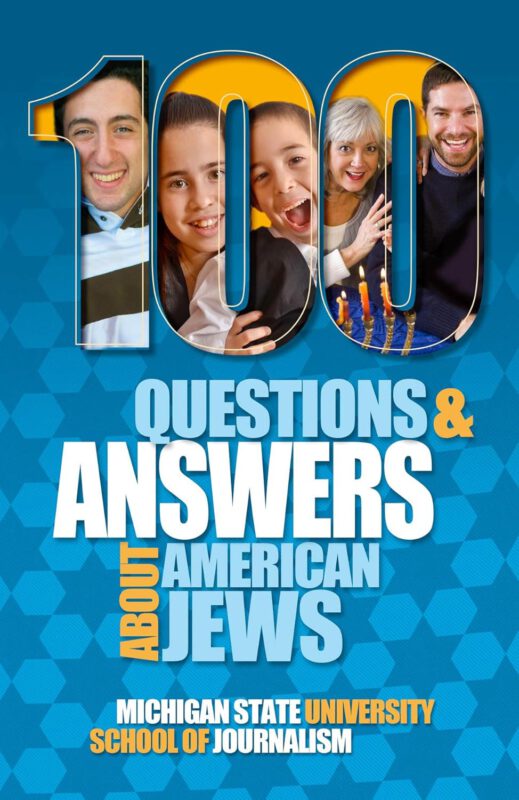
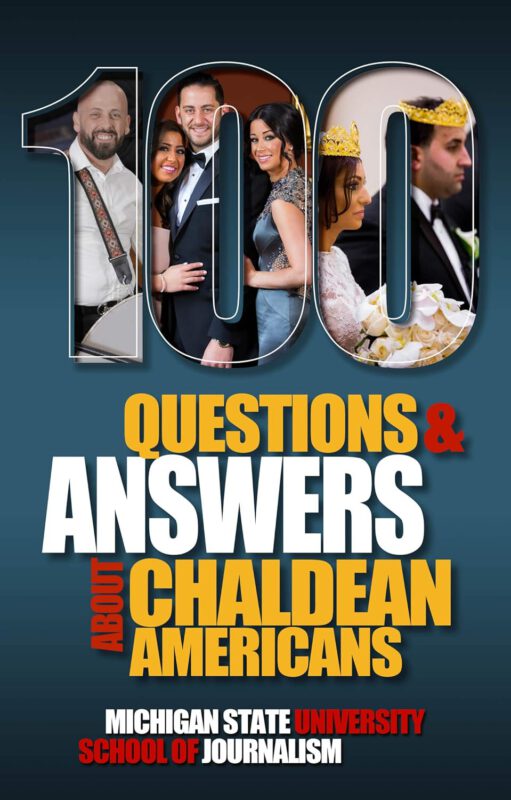
And, please, expand your religious understanding with 100-question Bias Busters guides about Jews and Chaldeans published by the Michigan State University School of Journalism. Several of the people in this articl, including Gad-Harf, Horwitz, Manna and Archambault, helped on these guides. You’ll also find guides about Muslims, Arabs and several faith groups and ethnicities on this Amazon page.